
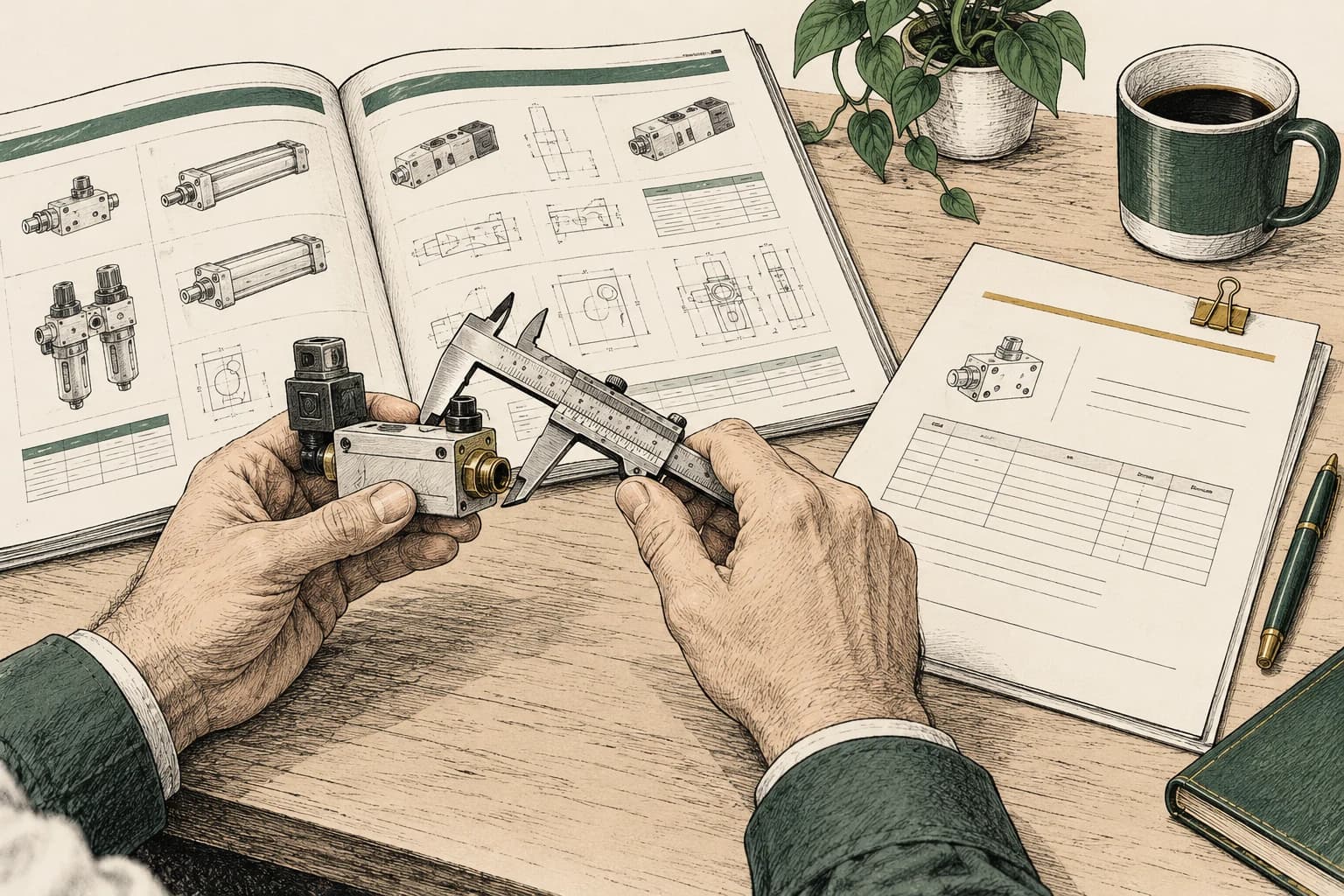
Industrial SEO should help suitable buyers find equipment they can assess and request a useful quote for. Start by defining the enquiries your sales team can accept, then build product and application pages around the facts those buyers need.
A known-model buyer needs variant details, compatibility and availability. An application-led buyer needs selection guidance and a way to confirm technical fit. Keep specifications tied to reviewed documents, explain installation or support limits where relevant, and test that the quote request reaches sales with its context intact.
An RFQ is a request for quotation. Measure accepted RFQs and later orders separately from visits. Begin with one verified page and enquiry route before expanding the library.
Define fit before choosing topics
Ask sales and delivery what they need to know before preparing a quote. The answer will vary by product. A replacement component may need a model, dimensions and operating conditions. A complete production line may require material details, capacity under stated conditions, utilities, installation location and service expectations.
Use actual rejected and accepted enquiries where you have permission. Look for the reasons behind them. A request can be unsuitable because of geography, configuration or service coverage even when the buyer is serious.
A simple rubric can help:
| Enquiry category | What happens next |
|---|---|
| Requirement fits and key facts are supplied | Sales confirms details and prepares the next step |
| Likely fit, with missing technical facts | A specialist asks focused clarification questions |
| Requirement outside supply or support scope | Explain the limitation clearly |
This is a proposed classification. Test it with your own team rather than turning it into an invented conversion benchmark.
Separate replacement searches from application questions
Someone who knows a part number needs to confirm the right variant, availability and compatibility. Someone solving an application problem needs help understanding selection criteria.
The second buyer may not know your product vocabulary. Give them a path from the situation to a product family, and explain when specialist advice is needed. Keep that explanation linked to the relevant specifications.
For large machinery, the sale may depend on commissioning, training, maintenance and spares as much as headline capacity. State what is included, what is optional and which conditions affect the advertised performance. A capacity number without those conditions can create the wrong expectation.
An RFQ is a request for a quote. The sales team still needs to assess the request; traffic alone cannot establish fit.
Put the facts where the decision happens
A manufacturer PDF can be valuable evidence. A readable product page can explain what the document means for the buyer and point them to the original.
Keep the manufacturer's model identifier and units intact. Explain the range, variants, application limits and information needed to confirm selection. If values are subject to configuration or revision, say so beside the value.
Do not turn a catalog of variants into many near-identical pages. Use a table or selection interface when it serves the buyer, and make important information available as text. The product-page guide works through that editorial task.
What the SN Machinery example can teach
Our existing SN Machinery case describes product-selection content, a cylinder-force calculator, model tables and quote routes beside relevant products. The public business supplies industrial components, including pneumatic cylinders and bearings. That is adjacent evidence for making technical fit easier to inspect.
It is not evidence of equivalent results for a complete packaging line or another large capital-equipment sale. Those products have different technical dependencies, order values and buying cycles.
The case reports 80–90 purchase enquiries per month and a typical order value of about $500, based on client-reported figures. Their product is $40K–$45K in potential monthly order value if each enquiry represents one possible order. It is not booked revenue or a record of sales attributable to AI.
That distinction matters when applying a case to your own business. Use the documented page work as a practical example. Use your actual enquiry and order records to evaluate the commercial result.
A model-led buyer and an application-led buyer may need different information before contacting sales.
Choose content around the next buying decision
A useful application guide explains the conditions under which a product family fits. A comparison helps a buyer weigh documented differences. A service page establishes installation or support scope. Each has a different job.
For a proposed packaging-equipment example, an owner could map questions about the material being filled, required output conditions, cleaning, changeover and service coverage. Those are constructed planning questions, not records of measured AI demand or specifications for a particular machine.
Only publish values when a dated supplier document or qualified reviewer supports them. Where an answer depends on the application, help the buyer explain that application rather than filling the gap with a confident number.
Check whether buyers can actually enquire
Test a known-model quote request and an application-led enquiry. Can the first buyer carry the selected item into the form? Can the second say they need help choosing? Does the confirmation explain what will happen next?
Check that the enquiry reaches the right person and that technical details survive the handoff. Record errors as part of the test. A polished button is not evidence of a functioning sales route.
Use only the fields your team needs at this stage. If a buyer cannot answer a technical question, give them a useful way to say that and provide context.
Measure accepted enquiries through the sales cycle
Keep visits, RFQs, sales-accepted opportunities, proposed value and booked orders in separate fields. Record the period and the definition used for each. A long buying cycle may leave an opportunity open well after the page changes.
The saved keyword research gives the owner topic a reason to investigate, but it does not forecast leads. “SEO for manufacturers” has provider averages of 390 US and 260 UK monthly searches in the September cache; its August estimates are lower, at 170 and 20. We do not add this to overlapping industrial SEO estimates or describe it as rising demand.
Begin with one product or application page your team can verify. Connect it to useful supporting content and a tested quote route. Then review whether the enquiries become more suitable before expanding the page library.
Discuss an equipment content and enquiry plan if you want TCC to help gather the evidence, prepare the pages and measure what happens next.
Frequently asked questions
Which equipment pages should we improve first?
Start with products or applications that customers already enquire about. Check whether the page provides reviewed specifications, fit constraints and a clear route to request a quote.
Can marketing write the specifications?
Marketing can explain verified product documents. A qualified product expert must approve technical values, operating conditions and suitability claims.
What makes an equipment enquiry useful?
Enough context for sales to assess the requirement: the model or application, operating conditions, quantity and delivery needs. Keep uncertain details available for technical review.